Brought to you in partnership with Foresight Group
In a recent conversation between Tax-Efficient Investment (TEI) Magazine’s Content Editor, Matt Williams, and Richard Roberts, Head of Sales Development at Foresight Group, Richard shares his perspective on the rising demand for VCTs and the growing appeal of deep-tech investing. With more than 25 years’ experience in financial services, including 15 years in venture capital and private equity, Richard discusses why VCTs are becoming a core part of modern financial planning, how Foresight is adapting its strategies to today’s evolving market, and the real-world impact of backing high-growth companies solving tomorrow’s biggest challenges.
During his 25 years’ experience in the financial services sector, Richard has spent the most recent 15 years in venture capital and private equity. Founded over 40 years ago, Foresight is an FTSE 250 listed business with around £13.7 billion in assets under management. They have some 40,000 retail investors using their tax-efficient products, ranging from inheritance tax solutions to VCTs and EIS.
In this interview, Richard explains the reason behind the continued strong demand for VCTs and how Foresight’s VCTs are adapting to suit the everchanging financial climate. He also reveals how VCTs can find their place in broader financial planning conversations, citing some of Foresight’s recent exits with deep-tech companies that are making a difference to so many lives.
Growing VCT appeal
Amid the uncertainty, along with the ever-developing world of technology, the market for VCTs has continued to grow. Richard noted that last tax year was the third-highest fundraising year on record for the market, with approximately £900 million going into the VCT market. He expects more positive statistics in the current tax year, especially following the changes to income tax relief which were announced in the November budget. After almost 20 years from the last change, the upfront tax relief available to investors will fall from 30% to 20% after 6 April 2026. This significant change is likely to drive record fundraising before the end of this tax year as investors seek to take advantage before it disappears.
There have been continued changes to the tax landscape, for dividends and savings, but particularly with frozen income tax allowances now extended to 2031. This has caused an increased number of people to be affected. “Frozen allowances are going to extend the number of people that are brought into the higher rate tax bracket to an estimated 10 million people, which is almost a third of the actual workforce,” Richard said.
This is accompanied by further uncertainty, including further changes to pension legislation, which will come into effect in April 2027. “When that happens, people will need to change some of their long-term planning strategies,” he added. “Uncertainty doesn’t help anybody, but it is forcing people to look at different asset classes as part of that wider investment portfolio, so VCTs are becoming increasingly part of the normalised financial planning toolkit.”
Deep-tech finds its niche
A strength of Foresight is its diverse suite of four VCTs. Ranging from their Technology VCT, which focuses on early-stage deep technology assets, to their later-stage, software-led Ventures VCT. “We also have two general enterprise flagship VCTs,” Richard said. “These are a little more mature and market-leading in their approach.”
While deep-tech and artificial intelligence are emerging technologies with serious everyday impacts, Richard noted that these more niche VCTs only make up around 15% of the market. “85% of the market is classified as a generalist VCT, which invests in a broad range of more traditional assets,” he explained. “ Our deep-tech and ventures VCTs fall into that specialist category.”
AI has been a hot topic for some time now, with Richard noting that investors want to have AI-focused companies in their portfolios. Foresight itself is looking to back AI-enabled companies that are used to boost efficiency, rather than going after AI itself. “The sector has been at the focal point of investing over the last few years,” Richard said. “We’re not going after the AI bubble; we’re looking to provide the shovels that are going after the AI gold rush.”
VCTs in the broader financial planning conversation
According to Richard, VCTs should form part of an adviser’s financial planning toolkit, especially now that they are increasingly more relevant to a wider group of investors. “VCTs were once only the focal point for ultra-high net worth individuals, but that’s no longer the case,” he revealed. “There is now a great opportunity for advisers to help many of their clients both shelter tax and grow their assets in a more tax-efficient environment.”
This coincides with pension changes, whereby those who earn over £260,000 a year now face a reduction in how much they can contribute to their pensions.
Richard added that VCTs are becoming a portfolio accompaniment to provide contribution flexibility in the long term.
Richard noted that people often focus on income tax relief as the main tax benefit, but explained that VCTs can be a valued addition to any modern portfolio. “According to data from Wealth Club, the top 10 VCTs in terms of size have outperformed the FTSE over the last decade,” he revealed. “If advisers can use this as a portfolio diversifier, it can add value to their clients, setting them apart from some of their peer group.”
Over the years, VCTs have allowed a significant number of investors to build portfolios, and the normalisation of the scheme has given investors more confidence that they may see positive results. “Given the budget changes, the amount of money going in will probably be another £1 billion this year if market conditions continue in the way that they are,” he said. “VCTs give people the reassurance that they can invest in this asset class and build that secondary, tax-free income stream.”
Another benefit of VCTs is the range of high-potential growth companies, which is something that Richard and Foresight are proud to be investing in. “We love what we do, especially in the deep-tech and venture portfolio”, Richard said. “We’re investing in companies that are solving some of the world’s most pressing problems.”
Successful exits
On the topic of solving problems, we asked Richard to point towards some of Foresight’s recent exits. Their generalist flagship VCTs (Foresight VCT and Foresight Enterprise VCT) have performed well in recent years. “A good example exit was with Callen-Lenz, which is a specialist in the aerospace sector, focusing on unmanned aircraft and drone manufacturing,” he revealed. “It delivered a 5.4x return within 3 years.”
Richard noted a 10x exit in the previous year with Specac, a company which delivers infrared spectroscopy accessories. “Investing in these products can provide investors with capital growth and a strong, passive, tax-free income stream,” he added.
Foresight is excited with their range of VCTs, which focus on solving some of the world’s most pressing global challenges, such as climate change, resource scarcity and addressing geopolitical tensions. He cited another recent investment in Spaceflux, a provider of optical space intelligence which tracks satellites and space debris in real time.
Elsewhere, Foresight has worked with Previsico, who deliver flood-forecasting and prevention systems. “Flooding is a global problem, and the impacts it has are astronomical,” Richard said. “Previsico’s software offers flood forecasting which predicts where large-scale flooding may occur, and helps to give people forewarning, help manage infrastructure to improve drainage systems, and provides information to insurers to manage risk.”
Richard emphasised the excellent value in investing in the more niche VCTs, stating that it goes beyond the tax reliefs. “Don’t just look at the generalist VCTs,” he urged. “There are plenty of specialist VCTs who are working hard to solve many of the world’s most pressing problems and which can diversify investors’ portfolios.”
Creating superheroes
Richard concluded by giving us a final example of a company in their Technology VCT portfolio that is producing truly life-changing equipment. “Open Bionics is doing amazing work in creating 3D carbon-fibre prosthetic limbs for children, but also for victims in Ukraine who have lost limbs in the conflict,” he revealed. “While the NHS’s options are often very heavy and uncomfortable,
Open Bionics’ are lighter, easier to use, and personalised to each individual.” Open Bionics formed a partnership with Disney, enabling the printing of 3D prosthetic limbs designed after Marvel superheroes, among other things. “Children can now go into school feeling less self-conscious or uncomfortable about their prosthesis, creating a narrative on turning disabilities into superpowers,” he concluded. “This is a lovely example of where private capital going into VCTs in the deep-tech space can be used to really make a meaningful difference to people’s lives.”
1https://obr.uk/docs/dlm_uploads/OBR_Economic_and_fiscal_ outlook_November_2025.pdf
This article has been issued by Foresight Group LLP (“Foresight”) which is authorised and regulated by the Financial Conduct Authority (“FCA”), under firm reference number 198020. Foresight’s registered office is The Shard, 32 London Bridge Street, London, SE1 9SG. This article has not been approved as a financial promotion for the purpose of FSMA. Without limitation, this article does not constitute an offer, an invitation to offer or a recommendation to engage in any investment activity. The information contained in this article is based on material we believe to be reliable. However, we do not represent that it is accurate, current, complete or error free. Tax treatment is subject to change and depends on individual circumstances. Tax year 2025/26. Capital is at risk and past performance is not indicative of future performance and returns are not guaranteed.
About Richard Roberts
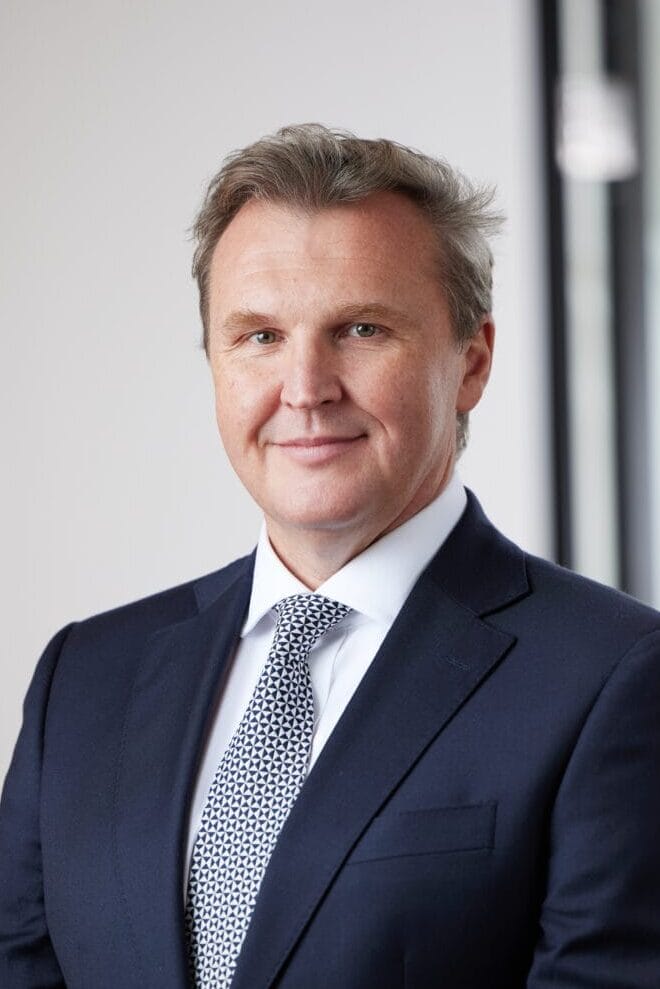
Richard is Head of Sales Development at Foresight, and is based in our London office. He has over 20 years’ experience in financial services and private equity. Prior to Foresight, Richard was a Director at Oxford Capital. He holds a BA in Classics from Exeter University and is a Chartered Fellow of the Chartered Institute of Securities and Investments, and the Chartered Management Institute.
Click here to learn more about Foresight Group