Charlene Young, senior pensions and savings expert at AJ Bell, assesses what an increase in the personal allowance could mean for taxpayers after years of frozen income tax thresholds.
“Prime Minister Andy Burnham has hinted he wants to look at the frozen personal allowance at his inaugural Budget, increasing it to help ease cost of living pressures. While this would undoubtedly be immensely popular, it could prove an expensive tab to pick up for new Chancellor John Healey.
“Long-suffering taxpayers have seen take home pay hammered by a perpetual cycle of stealth tax increases ever since Rishi Sunak froze income tax thresholds to ‘get the public finances back on track’ after Covid. The UK’s finances appear to have been derailed ever since, with Jeremy Hunt and then Rachel Reeves doubling down on the freeze. As a result, we’re only at the halfway mark in a decade-long tax freeze marathon set to cost some taxpayers tens of thousands.
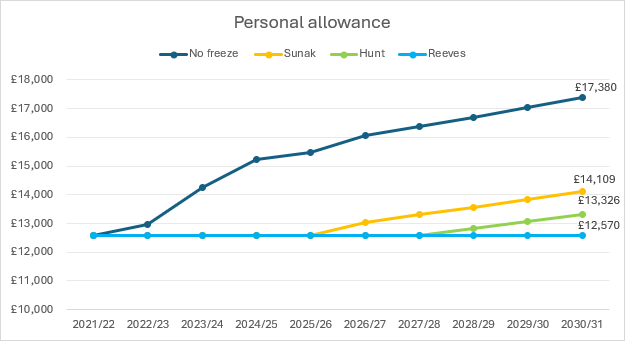
“Had it tracked inflation, as measured by September CPI in previous years, the personal allowance would sit at just over £16,000 today. That means it is already costing most taxpayers around £700 a year. If the freeze did continue until the end of 2030/31 a basic rate taxpayer stands to be around £960 worse off, although the exact amount will depend on wages and inflation in the interim.
“If John Healey and Andy Burnham do announce some respite in the form of an increase in the personal allowance, it is highly unlikely to restore the tax-free threshold in real terms. Unless the threshold is meaningfully increased and the personal allowance indexed to inflation again, taxpayers may be left feeling that a brief ray of sunshine in the end is a false dawn.
Higher rate threshold freeze
“Part of the appeal of lifting the personal allowance is that it ticks a lot of boxes. It can be implemented quickly and results in an immediate boost to most people’s spending power, including workers and pensioners. The benefit is felt by the majority of taxpayers, and lower income households feel the biggest benefit because the tax cut is worth more as a proportion of their total income.
“Higher rate taxpayers will get the same tax reduction in nominal terms, but proportionate to their earnings it’s smaller and the saving will be dwarfed by the huge loss of income they’ve suffered due to the freeze on the 40p tax threshold.
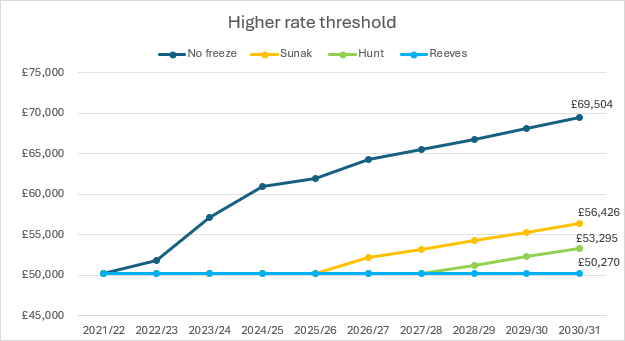
“Higher rate taxpayers pay 40% for every extra £1 of income above the frozen higher rate threshold of £50,270. Had it tracked inflation, this should be over £64,000 today and nearly £70,000 by 2031. To put it in context, for someone earning £75,000 the higher rate threshold freeze alone is set to cost them around £4,000 a year. A few hundred quid off their tax bill next year won’t come close to compensating them for the thousands they’ve lost thanks to the higher rate threshold freeze.
Where would tax thresholds be without the freeze?
“Chancellor Rishi Sunak first announced the freeze to the personal allowance – the tax-free earnings limit – and the higher rate threshold at his March 2021 Budget, saying it was necessary to help fix the public finances following the pandemic.
“The freeze was due to hold thresholds at April 2021 levels until 2026 but was subsequently extended to 2028 by Jeremy Hunt. After initially pledging to end it at that time, Rachel Reeves took an abrupt turn and chose to extend the freeze for a further three years at Budget 2025, to avoid breaking a Labour manifesto pledge not to raise the rates of income tax for working people.
How much could a hike in the personal allowance give you?
“Raising the personal allowance by £500 could give basic rate taxpayers £100 off their annual tax bill. The more it’s hiked, the bigger the potential tax saving, and the bigger the fiscal hole Healey needs to fill. HMRC estimates that every £100 increase in the allowance costs around £1 billion a year on average, meaning a £500 hike could cost around £5 billion.
“An increase would not benefit those who see their personal allowance tapered as their adjusted net income breaches £100,000. Currently, the loss of £1 of allowance for every £2 income over the limit creates a 60% marginal income tax rate on extra income between £100,000 and £125,140 across the UK. The fact that the starting limit for the taper has been frozen since it was introduced in 2010 is also often overlooked, but this marginal tax rate trap is set to get even worse if the threshold for additional rate tax is also not increased, resulting in the additional rate threshold dropping in below the point at which the personal allowance taper ends. The marginal tax rate could reach 67.5% in England and Wales, or 75% if the rumoured 50% additional rate threshold is implemented too.
“As Scotland sets its own bands and rates, there is already the potential for it to hit 72% on a slice of income above £125,140 north of the border.
What are the alternatives?
“One measure that would still curry favour with workers, including the self-employed, would be a cut to National Insurance. This is currently payable by employees at 8% on earnings between £12,570 and £50,270 (6% for self-employed profits) and 2% above this upper earnings limit. Cutting each main rate by 1% would cost around £5.8 billion but would give working people a lot more breathing space. For example, someone earning £35,000 a year could save around £225, compared with £100 from a £500 increase in the personal allowance.
“It’s worth remembering that this cut would not benefit pensioners, who don’t have to pay NI contributions. This would be politically more difficult as those over state pension age are set to account for more than a quarter of taxpayers by the end of this tax year.
An increase to the additional rate of tax is not the answer
“As well as an increase to the personal allowance, Andy Burnham is also said to be considering whether he should bring back the 50% additional rate of tax to fund spending pledges.
“Currently, taxpayers face a 45% tax rate on earnings over £125,140, while the top rate is 48% in Scotland. But pushing the rate above 45% can trigger behavioural changes that significantly erode the expected revenue, raising questions over whether it would be anything more than a performative tax rise on the highest earners.
“In fact, there’s a real risk that increasing the top rate of income tax could reduce tax revenues. The additional rate was first announced in 2009 and then came into force from April 2010. This meant affected taxpayers faced a 50% rate on their top slice of income, rather than 40%. HMRC analysis in 2012 concluded that the behavioural response to the new rate had been greater than originally assumed and the expected yield from the measure was slashed from £2.6 billion to £0.6 billion. This is solid evidence that while a policy might offer an eye-catching headline, getting the numbers to stack up is a much larger challenge than supporters are often willing to acknowledge.”