Tax-Efficient Investment (TEI) Magazine’s recent reader survey[i], in conjunction with the Tax-Efficient Investment Insights report, reveals plenty of room for optimism when it comes to adviser sentiment towards the use of EIS, SEIS, VCTs, AIM and BR investments within clients’ portfolios. As Matt Williams, Content Editor at TEI Insights, details over the following pages, this research demonstrates current usage of the schemes as well as where advisers hold the most confidence, and how they expect the space to evolve in future.
Our survey was completed in the Autumn of 2025, by 120 industry professionals, 72.5% of whom work in independent financial advice firms, while 23% operate in networked financial advice firms, and roughly 5% from asset management firms. The purpose of our survey was to gauge how EIS, SEIS, VCTs, AIM and BR investments are being used by advisers in practice. These UK government-backed initiatives are all designed to encourage investment in small, high-growth, early-stage companies by offering investors substantial tax benefits. Of the survey respondents, a total of 85% were financial advisers, with paraplanners and wealth managers making up the remainder. Our thanks go to all of those readers who responded to our survey and shared your insights with us. We really do appreciate it, and your feedback has been invaluable and has formed the basis of this publication.
The advisers who responded to our survey typically work in smaller firms, with 70% employed in practices with five advisers or fewer. Despite this, roughly 80% serve clients whose high net-worth is valued at between £250,000-£2 million. Meanwhile, 32% advise clients whose net worth is valued at over £2 million, which emphasises the lucrative opportunities presented by tax-efficient investing within those client segments where tax planning opportunities are a particular focus.
How tax-efficient investments are utilised
Of those readers surveyed, 70% told us that they recommend or advise on at least one type of tax-efficient investment scheme to clients. However, as would be expected given the higher risk nature of such investments, the actual proportion of client portfolios invested in these schemes remains relatively low overall. 60% of respondents reported that less than 10% of their clients currently have exposure to tax-efficient investments, while a little over 20% said that none of their clients currently hold such investments, with 19% saying that more than 10% of their clients hold such investments.
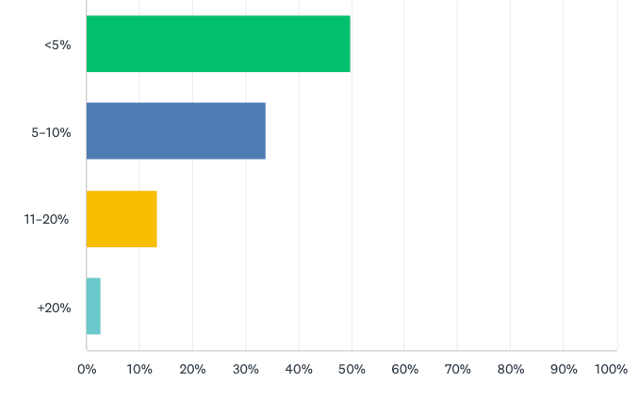
As shown in Fig.1 within their clients’ portfolios, 50% said allocations to such tax-efficient investments typically represent less than 5% of a client’s overall portfolio, while a further 34% suggested allocations of 5%-10%. Only around 16% said the allocations exceed 10%. To us, this demonstrates that there is a real opportunity for advisers to increase engagement with clients more effectively in regard to tax-efficient investments, whilst bearing in mind clients’ suitability and risk tolerance requirements, of course.
Fig. 1 Shows, on average, what % of client portfolios are allocated to tax-efficient investments
Benefits and drawbacks of EIS
EIS is designed to attract investment for established but still relatively early-stage businesses. Among those respondents who told us that they do recommend tax-efficient investments, 56% currently recommend or advise on EIS. However, as we would expect given the high-risk nature of EIS investments, it seems that most of these advisers tend to recommend EIS where it is appropriate for client needs, with over 90% of EIS users recommending such schemes only occasionally, and just 2% recommending them frequently.
According to 81% of those surveyed, the key benefit of using EIS is tax relief, followed by diversification benefits at 37% given that such schemes bring exposure to early-stage unlisted companies and growth potential at 28%.
Meanwhile, it would appear that amongst those advisers surveyed, there are still some concerns when recommending EIS. Nearly 17% of advisers told us that they believe EIS is too high risk or illiquid for their clients, while complexity, compliance burdens and client demand are also seen as reasons for caution when recommending EIS.
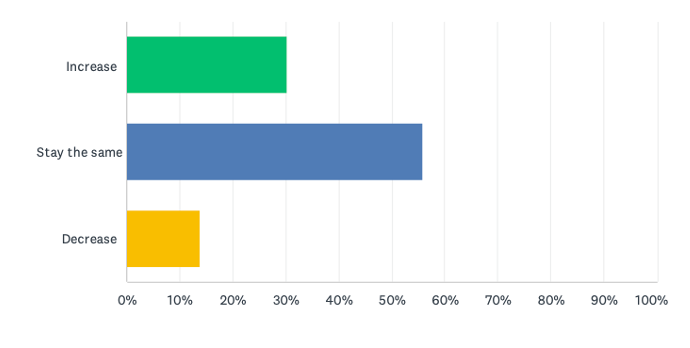
However, looking ahead, whilst there is some reticence and potential underuse of these valuable planning solutions, the prevailing attitude towards the use of EIS is very positive. As shown in Fig. 2, 56% of advisers told us that they expect their use of EIS to remain the same in 2026 as in 2025, while almost a third, 30%, say they expect their usage of EIS to increase. Just 14% foresee a decrease.
Fig 2. Shows how advisers expect their use of EIS to change or stay the same in 2026
Is SEIS a hidden gem?
Perhaps unsurprisingly, SEIS remains the least widely used tax-efficient investment option, possibly because of the exposure to smaller, potentially riskier investments, and the underlying very early-stage, potentially high-growth investee companies will have been trading for less than 2-3 years. Just 16% of those surveyed told us that they currently recommend or advise on SEIS. However, of those who do, 9% said they use it frequently.
Again, perhaps this result isn’t that surprising given that SEIS investments currently attract up to 50% income tax relief on investments up to £200,000 per annum, yet represent excellent opportunities for long-term growth as part of an overall well-diversified portfolio.
VCTs: A more established option?
While it seems that EIS/SEIS tend to be recommended more selectively, VCTs tend to be more widely adopted. Given that VCTs are pooled investments that can invest in between 25 and more than 100 underlying companies, they tend to be seen as relatively lower risk than EIS and SEIS. 76% of respondents told us that they currently recommend or advise on investments into VCTs, albeit the vast majority of those (83%) do so occasionally. However, 16% say that they are recommending this solution to clients frequently. Again, this is not surprising given the risk profile of VCTs and client suitability and risk tolerance being major considerations when it comes to recommending them. They clearly offer compelling benefits for those clients for whose needs such schemes are appropriate.
Once again, the most common benefit of VCTs cited was the income tax relief on newly issued shares, this time according to an overwhelming 93% of those surveyed. 38% see VCTs as a useful option for increasing diversification in a client’s portfolio. The boost from dividend/tax-free income was also a notable benefit, according to 69% of respondents.
Also, advisers pointed to the value of the track record of a particular trust or manager, with 28% noting that this was a factor they consider when using VCTs.
From our survey, it seems that advisers’ confidence in the future of VCTs is strong. 50% of respondents told us that they expect their use of VCTs to increase in 2026, while the remaining 43% expect their use of VCTs to stay the same. Only 6.9% expect their use of VCTs to decrease this year.
However, it should be noted that our survey was conducted ahead of the November Budget announcement, confirming that VCT income tax relief will be reduced from 30% to 20% from April 2026.
While we’d suggest that this change could have an impact on adviser behaviour over time, the results still point to a strong underlying appetite for VCTs amongst respondents. Their established track record, tax-free dividend income and role in portfolio diversification mean that VCTs look likely to remain an increasingly relevant option for many advisers and clients, despite the lower initial income tax relief environment from April 2026 onwards.
This forthcoming change to income tax relief could, of course, potentially increase the demand for VCTs during what is left of the 2025/6 tax year as advisers and clients look to make use of the 30% relief while it lasts. Advisers would be wise to engage with clients as early as possible to ensure the availability of VCT new issues to meet such client demand.
Business Relief and AIM: confidence, with some caution
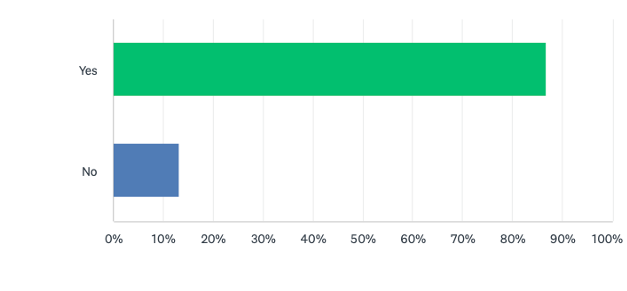
According to our survey, when it comes to Business Relief and AIM, Business Relief (BR) remains the more widely used tax-efficient solution, with 87% of advisers surveyed currently recommending or advising on it, as shown in Fig. 3.
Fig 3. Shows how many advisers currently recommend or advise on BR investments.
Amongst those who report recommending BR to clients, 24% say they do so frequently, while 75% report using it occasionally. Inheritance tax planning is the clear driver, cited by 95% of respondents, alongside the speed of relief, with 74% valuing the two-year timeframe compared with trusts and the seven years required under gifting rules.
Concerns around BR seem relatively limited. While 23% point to client demand as a potential issue, far fewer highlight liquidity (6%) or complexity and rules risk (5%). Reflecting this confidence, 70% of advisers told us that they expect their use of BR investments to increase in 2026, with just 8% anticipating a decline.
From our data, it seems that recommending or advising on AIM portfolios, as one route into BR, also offers attractions. There was a 50/50 split in the advisers who reported currently recommending AIM portfolios. Of those, 78% told us that they do so occasionally, with just 7% doing so frequently. Inheritance tax relief remains the main attraction of recommending AIM portfolios (79%), alongside growth potential (34%) and the benefits of relatively increased liquidity from the underlying investments into listed shares (16%). However, volatility (24%) and client demand (27%) remain key concerns.
When it comes to adviser expectations, 50% are anticipating their AIM usage to remain unchanged in 2026, whilst 34% are expecting a decrease.
It’s worth noting that the survey was carried out ahead of the Government’s late 2025 announcement increasing the cap on 100% BR from £1m to £2.5m, which may temper some of this uncertainty as advisers reassess AIM’s role in inheritance tax planning.
Overcoming the barriers
For advisers who do not currently recommend tax-efficient investments, the key reason seems to be the perceived risk or volatility (58%), given that such investments will naturally be considered a higher risk element within an overall client portfolio.
Meanwhile, the lack of client demand or appetite for such investments is certainly a barrier for 55%, while 39% noted concerns over liquidity and exits, and 30% pointed towards a lack of familiarity or confidence in the schemes.
As shown in Fig. 4, when asked what would make them more likely to recommend tax-efficient investments in future, 52% suggested that simplifying the structures and compliance processes would give them more confidence. 45% would like to see more evidence on performance/successful outcomes and a greater demand from clients before they consider becoming more active in the space.
Fig 4. Shows what would make it more likely for advisers to consider tax-efficient investments in the future.
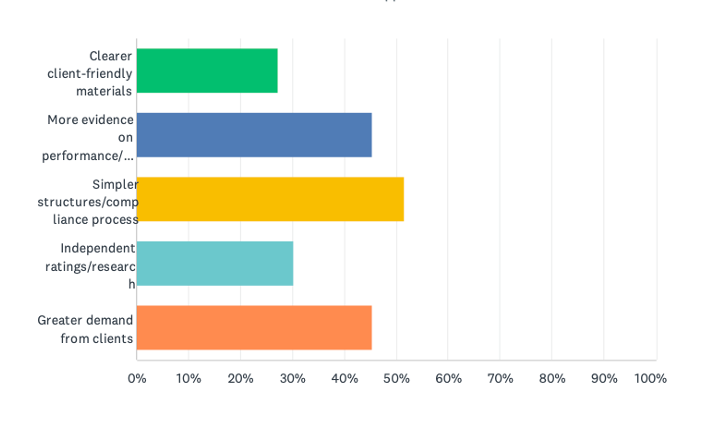
Another popular solution would be an improvement in clearer, more client-friendly materials (27%), while 30% noted that seeing more independent ratings and research might give them the confidence to advise on tax-efficient investment opportunities.
Preferred providers: where advisers place their trust
Alongside usage and attitudes, we also asked advisers which tax-efficient investment providers they most associate with this market. The results, shown in Fig. 5, point to clear recognition around a group of established managers.
Fig 5. Shows advisers’ preferred product providers within tax-efficient investing.
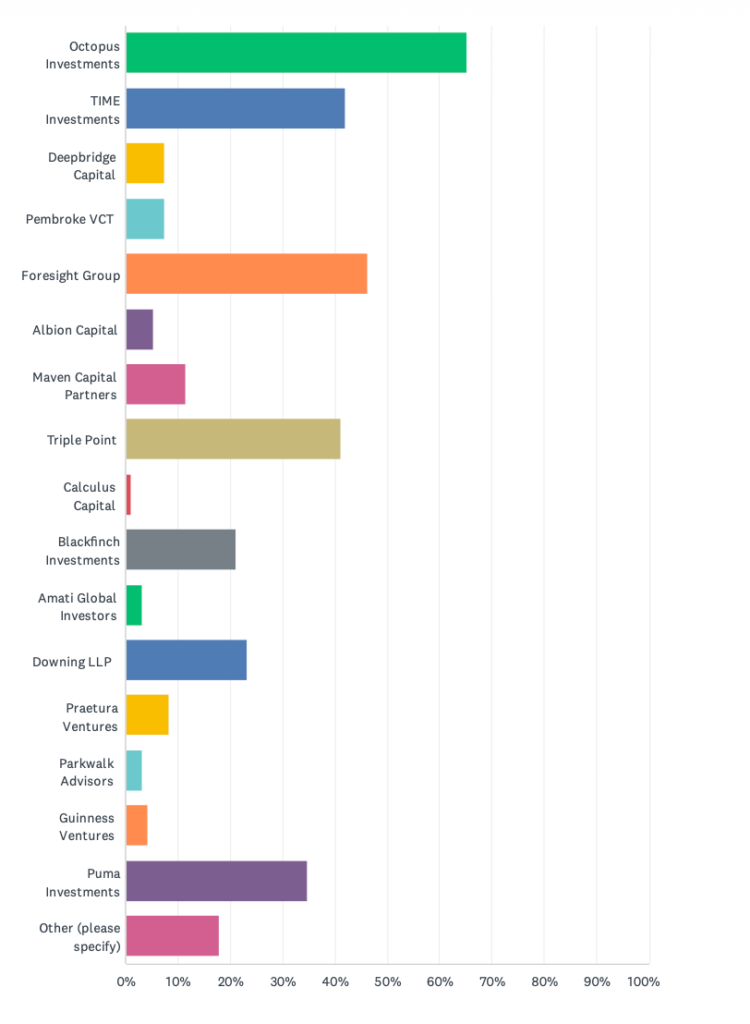
Octopus Investments was the most frequently named provider, selected by 65% of respondents, reflecting its strong presence across VCT, EIS and Business Relief. Foresight Group followed closely behind, with 46% of advisers identifying it as a preferred provider, placing it firmly among the leading names in the sector. TIME Investments (42%) and Triple Point (41%) also featured prominently, underlining the importance of scale, track record and visibility when advisers choose which managers to work with.
Looking ahead
Overall, our survey results give real optimism for the future of these exciting growth vehicles. Encouragingly, adviser sentiment towards the use of tax-efficient investments remains positive and looks set to grow in the years ahead. Around half of respondents (48%) believe the benefits of these tax-efficient investments will become more favourable in future, 28% believe they will stay the same, while just 23% expect this to decrease.
The results of this survey indicate a bright future for these attractive schemes and the considerable planning benefits they offer. They show that, while there may still be some questions surrounding the recommendation of tax-efficient investment schemes, the market is maturing and the benefits are becoming more compelling – especially for the HNW client segment.
EIS and SEIS tend to be more focused on the specialist needs of wealthier clients, which, given their higher risk nature, is not surprising. However, they still offer clear benefits for diversification as well as effective tax and estate planning, especially for high-net-worth individuals and sophisticated investors with an appetite for high-risk, long-term investments. Overall, our survey results reinforce more orthodox thinking that the use of VCTs and BR stand out as key opportunities for advisers and their clients, whilst EIS and SEIS also offer genuine appeal.
With other tax-efficient savings, estate planning and investment options such as pensions becoming increasingly more limited in scope, the stage looks set for EIS, SEIS, VCT, BR and AIM investments to continue to thrive as part of a client’s overall well-diversified investment portfolio. This looks to be particularly the case given the 2025 Budget changes to increase the qualifying limits for companies from April 2026, and despite the change to income tax relief for VCTs on subscriptions from the same date.
This piece featured in this year’s annual issue of Tax-Efficient Investment (TEI) Insights, which you can read here!
[i] About the Survey. Important Information; “Understanding adviser use of tax-efficient investments”: Tax Efficient Investment Magazine’s 2025 Adviser Survey was carried out online from 16th September – 13th October and gathered 120 responses.