Our ‘In Focus’ campaign this month explores how younger generations are reshaping the advice landscape, from where they turn for financial guidance to the expectations, priorities and behaviours advisers need to understand.
A new BrokerChooser analysis revealed that more than nine in ten (93%) trading-related videos on TikTok are potentially misleading or harmful, with “fin-fluencers” rarely encouraging viewers to do their own research.
The findings come amid growing financial danger posed by so-called “fin-fluencers”, as 42% of Brits who acted on social media investment content reported losing money, a concerning statistic considering 7.7 million people in the UK have taken financial advice from a social media influencer.
A Freedom of Information request from BrokerChooser earlier this year also revealed a 174% spike in enforcement action by the Financial Conduct Authority (FCA) against fin-fluencers.
To better understand the scale of this content circulating on TikTok, forex broker experts BrokerChooser analysed 100 of the most popular trading-related TikTok videos posted by fin-fluencers, uncovering widespread concerns around transparency, as well as the type of financial content users are exposed to on a daily basis.
The results:
- Just 2% of trading advice on TikTok included relevant disclaimers
Overall, the analysis revealed that a staggering 93% of trading content on TikTok was potentially misleading, with only 2% – equivalent to just 1 in 50 videos – featuring any form of risk warning or disclaimers. This means the vast majority of trading content exposed to users does not include basic risk disclosures such as “capital at risk” or “past performance is not indicative of future results”.
Adam Nasli, Head Analyst at BrokerChooser said: “Without these warnings, even leveraged trading can be portrayed as a low-risk and straightforward route to profit, without any explanation around volatility or the possibility of losing money. This raises serious concerns around the level of protection being afforded to social media users, especially given the speed and scale at which online financial content is consumed.”
The report also shows that nearly three in five (58%) videos were actively promoting or attempting to sell a financial product or service such as a trading course or “system”, raising ethical concerns around disclosure standards and the motivations behind the content being shared.
- 40% of trading videos show fin-fluencers flaunting wealth with no trading context
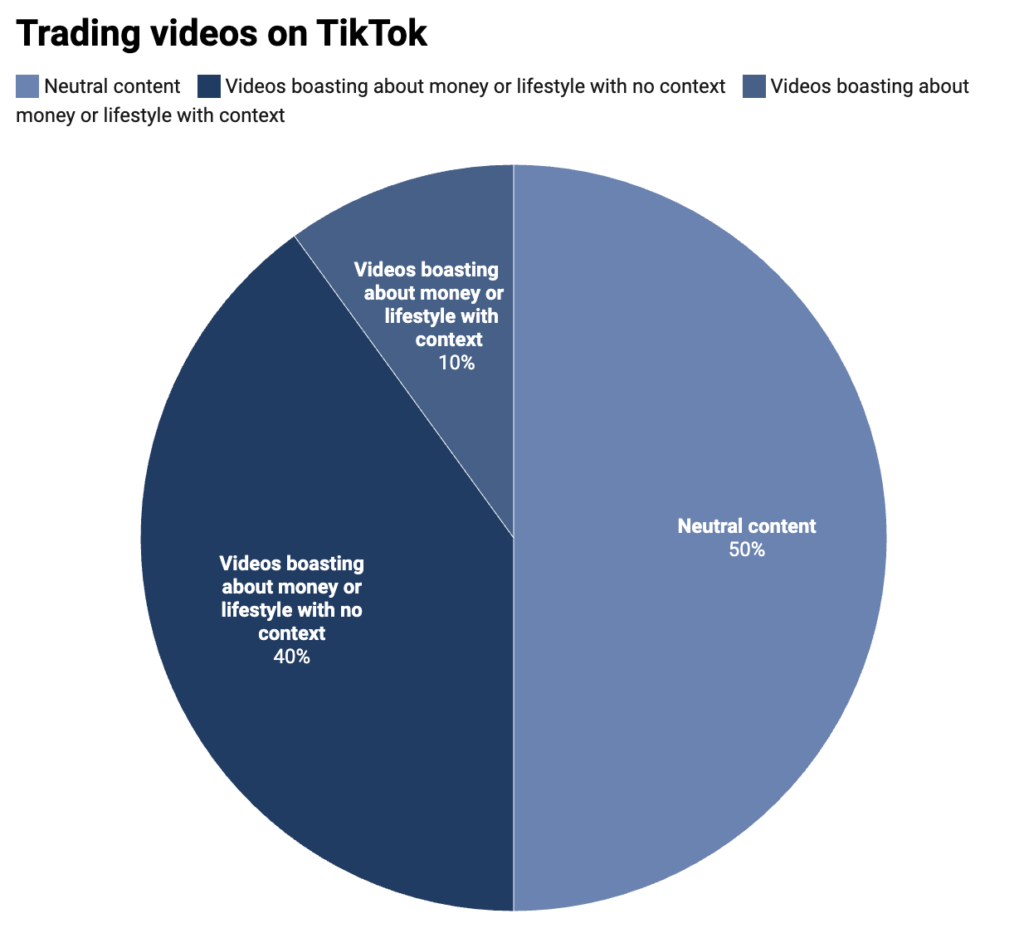
Disturbingly, BrokerChooser’s analysis also uncovered that two-fifths (40%) of trading content on TikTok features fin-fluencers boasting about their earnings or showcasing luxury lifestyles with no explanation beyond the vague mentions of “trading”. Only 10% of videos provided any explanation of how those results were achieved.
This could create a highly misleading picture of trading where profits appear easy and accessible without reflecting the reality of risk and market complexity.
- Less than one in five TikTok trading videos contained real trading information
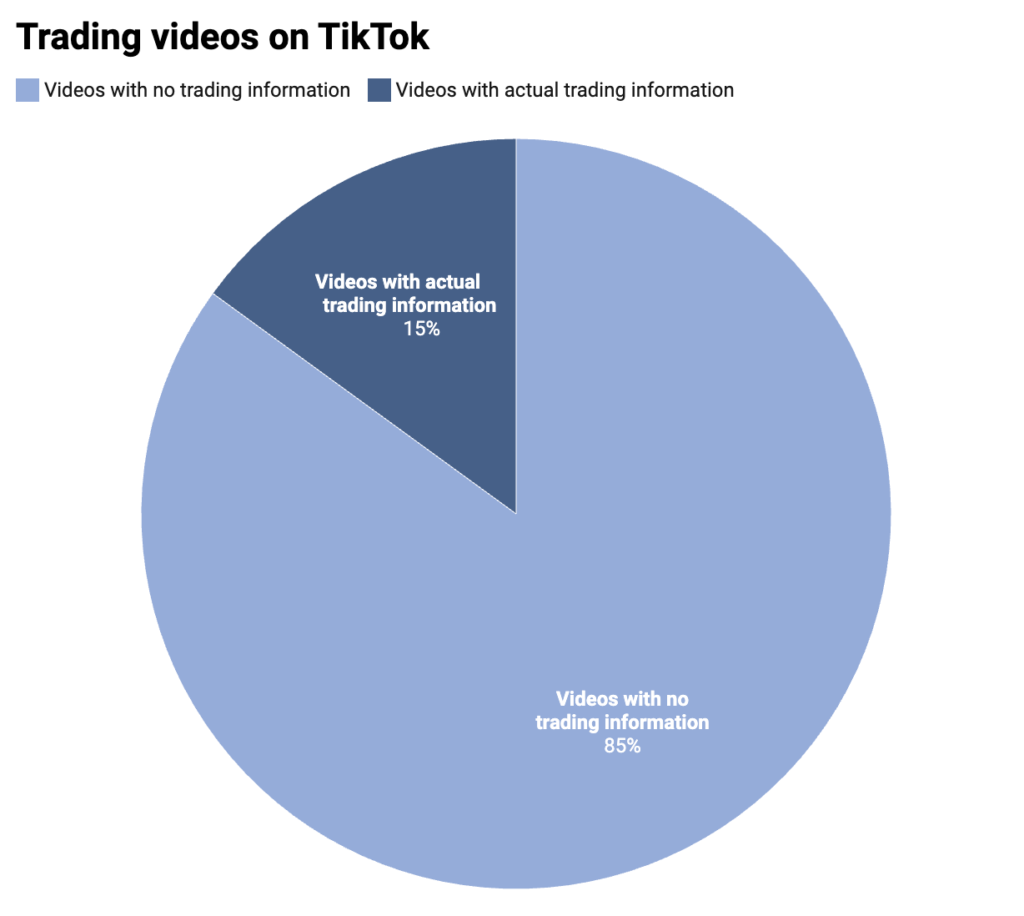
Fewer than one-fifth (15%) of trading-related videos on TikTok contained any genuine trading information. Instead, the majority (85%) focused on lifestyle imagery, vague motivational claims or promises of quick wealth. Much of this content is shared without any disclosure of risks or by creators without verifiable credentials, raising serious concerns about the reliability of financial information being consumed.
Adam Nasli, Head Analyst at BrokerChooser warns:
“Nearly 80% of young people in the UK now trust advice from fin-fluencers with #FinTok generating around 155K posts on TikTok and #MoneyTok amassing over 3.2M views. But the reality is that 15 to 30-second videos are rarely enough to equip people with the knowledge needed to make informed financial decisions.
Our research shows that a staggering proportion of trading content on TikTok fails to include basic risk disclaimers, while often showcasing wealth supposedly earned through trading without any meaningful explanation of how those results were achieved. This creates a distorted view, framing it as a quick and easy route to financial freedom rather than the complex, high-risk activity it is in reality.
At scale, this kind of content could mislead novice investors and normalise unrealistic expectations, ultimately encouraging people to take on financial risks they don’t fully understand.
If you’re serious about learning to trade, TikTok is not the place to start. Seek reliable information from verified sources, rather than unverified influencers trying to sell you a dream. Always practice due diligence: question the source, verify credentials, and never take financial advice at face value.”