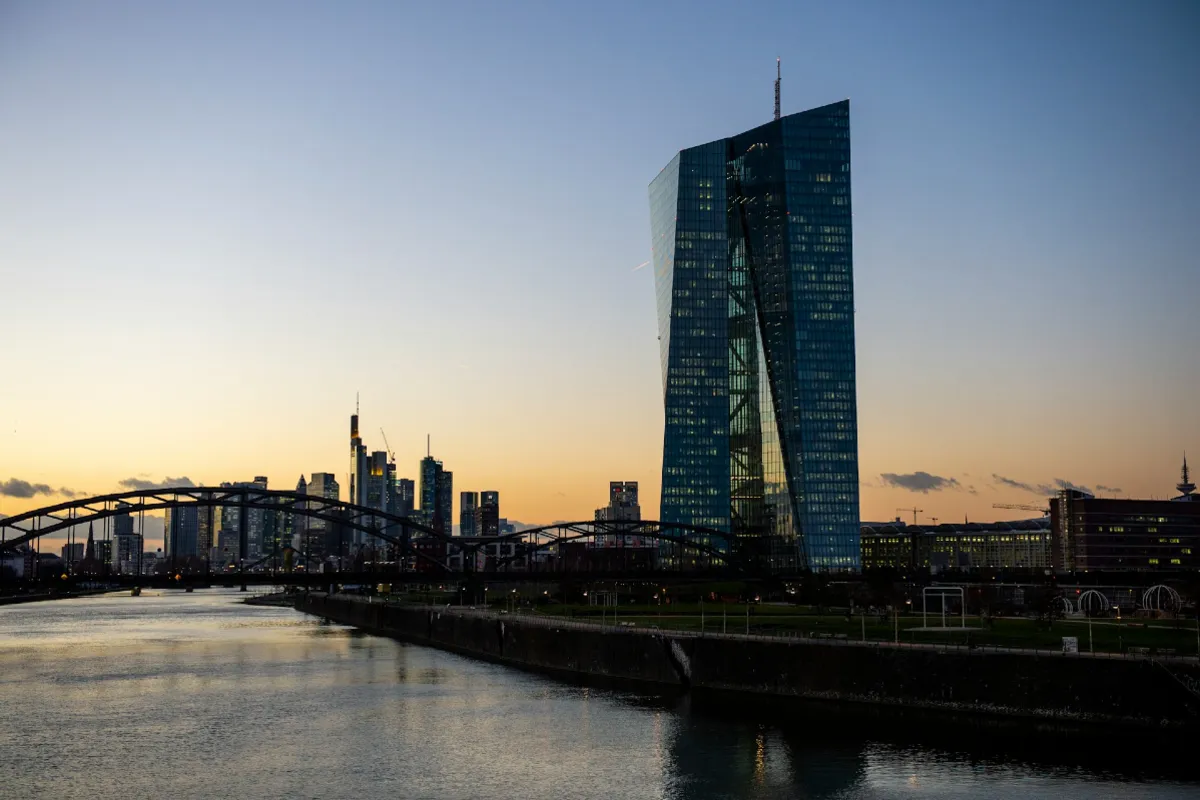
The European Central Bank (ECB) has left interest rates unchanged following last month’s increase, as policymakers take stock of the latest economic data.
However, renewed tensions in the Middle East, rising oil and gas prices and broader inflationary pressures are increasing expectations that the pause could be temporary, with markets looking towards a possible further rate rise in September.
Industry experts are reacting to the latest data below:
Richard Carter, head of fixed interest research at Quilter Cheviot:
“Having been the first major central bank to raise interest rates last month, the ECB has hit the pause button once again and left rates unchanged. This will come as no surprise as any subsequent rate rises are likely to be gradual in nature. The ECB is at a much more comfortable starting point than the Federal Reserve and the Bank of England, and as such can be a little more cautious in acting depending on the data.
“That economic data has been relatively benign of late following the initial ceasefire in the Middle East. This can give comfort to policy makers that they won’t misstep by choosing to hold, while still keeping the door ajar for further rate rises. Indeed, with oil once again spiking following a renewal of tensions between the US and Iran, and the knock-on effects for inflation, the ECB may need to use that breathing space when they next meet in September to raise rates and look to keep a lid on inflation.
“Indeed, despite its ability to hold rates today, the market still expects the ECB to be in a rate raising mood for the rest of the year. Clearly how aggressive it is in upping interest rates depends broadly on what is happening away from the continent, and that is making the job of the policy committee incredibly challenging.”
Conor Parle, Eurozone Economist, Fidelity International, said:
“The ECB left interest rates unchanged at their meeting today, but against the backdrop of higher commodity prices and the latest increased tensions in the Middle East, this pause is likely to be temporary.
“Beyond oil prices, gas prices had been increasing even before the recent heightened tensions. Higher demand to refill low supplies ahead of winter, alongside China increasing imports, are likely supporting further price pressures in the gas market.”
“These developments are likely to keep price pressures relatively broad-based. Meanwhile, reasonable resilience in the euro area economy means that, once the ECB updates its September forecasts, it will likely be in a comfortable position to increase rates by a further 25 basis points to the upper end of its neutral range, while sending a clear message about its commitment to price stability.”
Felix Feather, Economist at Aberdeen Investments, says:
“The ECB’s latest decision to keep rates on hold at 2.25% comes as no surprise. Generally, ECB officials prefer to move rates at forecast update meetings, the next of which will be in September.
“So this hold could be the first of a period of stability, or the calm before the storm. Which scenario we end up in will hinge on multiple factors, but the most important is how events in the Middle East shake out.
“At present, oil prices are sitting near $100/bbl. European gas prices are even more sharply higher.
“If persistent an energy cost shock of that magnitude would be too great for the ECB to look through – it would hike again in September.
“But a de-escalation in tensions could give the ECB the room it needs to remain on hold for the remainder of the year, as signs of the sort of second-round effects that could make the inflation overshoot become entrenched are scant so far.”