
Dynamic Planner, the UK’s leading digital advice platform, has today published new consumer research which has found that one in two people (52%) feel they would use targeted support if available.
The research was conducted in August 2025 with 1000 people across the UK. A preview was shared at TISA’s Flagship Annual Conference 2025, with the full study now available here: Dynamic Planner: Build it and they will feel more informed.
Further findings from the study include:
- The main barrier for 1 in 3 people to accessing financial advice currently is cost. Only 3% cited a lack of need
- One in two (52%) would use targeted support if it were available, increasing to 62% of people aged 25-44
- People with an investment risk profile of 6 are most keen to use targeted support
- Those people with higher levels of wealth felt it would be less beneficial than those with lower levels of wealth
- People most likely to use targeted support are younger, with medium risk levels and lower levels of wealth
- The idea of targeted support increases how informed people feel by 21%
- But intention to act moves by <1% on average — except for those who accessed financial advice in the last 12 months, where intention rises 10%
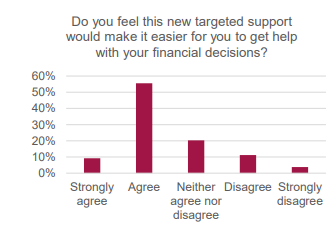
In addition, 67% of people felt that targeted support would make it easier for them to get help with financial decisions:
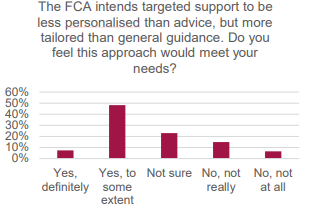
And 56% of people felt targeted support would meet their needs.
Dr Louis Williams, Dynamic Planner’s Head of Psychology & Behavioural Insights said: “Taking advantage of targeted support will be particularly beneficial for those who are unaware of the positive impact small changes to managing their finances can make, who feel they have too little to invest or that financial advice isn’t worth the cost.
“Humans are hardwired to avoid risk, and it’s all too easy to put off thinking about things to another day. But our research shows that even after a simple introduction to the concept of targeted support, people felt more informed and comfortable about what to do – with a little bit of direction in the right way, the inertia begins to fall away.”
Dr Philip Courtenay, Founder of behavioural consultancy, Humans and Money said: “It’s encouraging to see that consumers are open to targeted support and the value it can bring. But we also know that simply telling people what to do rarely shifts financial behaviour. If firms want to deliver targeted support that works, they must remove the behavioural barriers that hold people back from acting. This means instilling trust, stripping out complexity, and tackling the anxiety many people feel when it comes to changing the way they act with their money.”
The research findings also demonstrated the benefits of financial advice:
- People who received financial advice in the past 12 months are more likely to have confidence in their abilities to manage finances; be optimistic about their financial future; and feel knowledgeable about financial matters
- Those who had never accessed financial advice find it more difficult to make progress with finances and worry about running out of money.