After more than fifty years in financial planning — working with families, business owners, retirees and people simply trying to make sense of life’s financial ups and downs — Patrick Murphy, one of the UK’s most experienced and respected financial planners, says that one truth has always stayed with him: people don’t come to advisers for products. They come for peace of mind.
People seek advice for a variety of reasons and here are some but by no means all of them:
- They come because they’re worried they haven’t saved enough.
- Because a loved one has died.
- Because a job has been lost.
- Because they’ve inherited money they never expected.
- Because they want to protect the people they care about.
We often describe our work in technical terms—cash flow modelling, risk profiling, suitability reports—but beneath all of that is something simpler and more human: helping people feel safe when life is uncertain.
That was the motivation behind my latest white paper, Financial Planning in Transition. Having recently sold my firm and stepped back from day-to-day advising, I wanted to look at the profession with fresh eyes. What I saw was a profession full of talented, caring advisers — but also a profession under pressure.
Adviser numbers are falling. Clients are living longer. Regulation is more demanding. Consumer expectations are rising. And millions of people still can’t access any meaningful support.
At the same time, the FCA’s Consumer Duty has shifted the ground beneath our feet. We are no longer being asked simply to follow processes; we are being asked to evidence outcomes. Not “Did we advise the client?”
But “Did the client understand? Did they benefit? Did they make better decisions?”
Add to this the Advice–Guidance Boundary Review and the introduction of Targeted Support, and it’s clear that the regulatory landscape is inviting something new — a way of helping more consumers without diluting quality or breaching advice boundaries.
And this is where my conclusion became unmistakeable: the future of our profession is hybrid.
Not digital-only. We tried that, and clients didn’t buy it.
Not human-only. We simply don’t have enough advisers, and the economics don’t work.
But something in-between — where human judgement, empathy and experience sit alongside technology that helps us scale good outcomes.
Hybrid advice doesn’t replace the adviser; it frees the adviser.
Technology can gather data, generate basic reports, deliver nudges, test understanding, and maintain audit trails. It can help ensure consistency and compliance. It can support the behavioural element of advice — the timely prompts, the reframing, the reminders.
But only humans can:
- interpret nuance
- understand emotion
- reassure during volatility
- motivate long-term behaviour
- guide clients through uncertainty
I’ve lost count of how many clients over the years have said to me, “Patrick, I just needed someone to talk to.” No algorithm can replace that.
And yet, nor can we ignore the power of digital tools. They allow us to widen access, reduce cost-to-serve and create evidence that meets the FCA’s standards. Used well, technology doesn’t diminish our humanity; it amplifies it.
Targeted Support is one of the clearest signals yet that the regulator understands this. TS allows us to offer structured, contextual support to people at key life moments — without crossing the line into personalised advice. Done properly, it lets us meet people where they are, not just where our traditional advice model can afford to go.
But TS will only work if we adopt it with care. We need strong boundaries, clear escalation triggers, behavioural design, and robust MI to show the FCA that clients truly understand the information they receive.
More importantly, we need to see TS not as a compliance obligation but as an opportunity — a way to reach people who have never had access to our profession before.
When I look back over my career, I see a profession that has evolved many times. From commissions to fees. From sales to planning. From products to cash flow. And now, from process to outcomes.
This next shift — towards hybrid advice — may be the most important yet. Not because it modernises the profession, but because it allows us to bring the human side of advice to more people, more consistently, and at a price they can actually afford.
We have an opportunity to make financial planning more accessible, more compassionate and more effective than ever before.
And if we get it right, we won’t just close the advice gap. We will strengthen the backbone of a profession that has always been, at its core, about helping people live with more confidence and less fear and that is a future worth working toward.
About Patrick Murphy
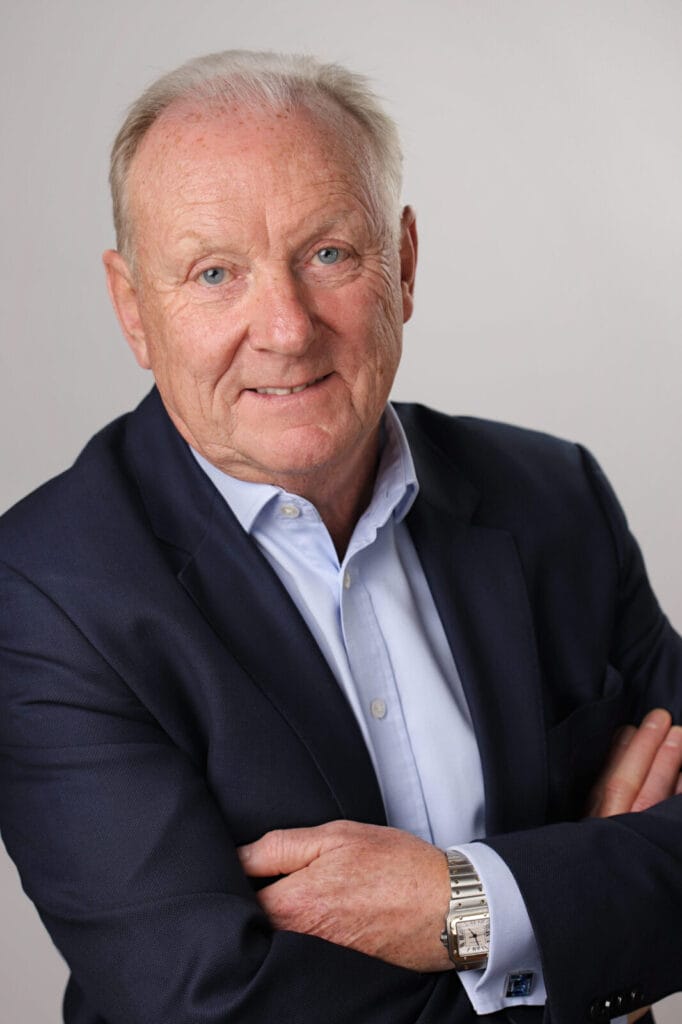
Patrick Murphy is one of the UK’s most experienced and respected financial planners, with over 50 years in the profession. He built and sold his award-winning firm, Zen Wealth LLP, after a long career that included winning numerous industry awards.
Patrick now leads Sustain Momentum Ltd, where he is exploring the use of AI, mindset, and modern strategy. His work blends deep technical knowledge with the human side of advice — helping advisers simplify their processes, elevate client experience, and enhance firm value.
His mission is simple: help advisers build better businesses, serve more people, and lead happier, more purposeful lives.