Almost 90% of adults in the UK don’t have access to financial advice, according to the FCA’s latest financial lives survey.[i] That’s not because they don’t need it, but because getting advice is often too costly or complicated. For Laura Cornely, Director of Count Finance, that gap became impossible to ignore, so IFA Magazine’s Deputy Editor Jenny Hunter explores with Laura what ultimately inspired the creation of the UK’s first fully automated, FCA-authorised financial adviser.
“I experienced it first-hand when I moved to the UK,” Laura says. “Despite having a solid income and savings, I couldn’t find an adviser who would take me on. That’s when it clicked, there’s a huge gap in the market, and automation could bridge it”
From politics to finance
Her route into finance wasn’t exactly planned. “I actually studied politics and statistics because I initially wanted to be a journalist,” she says. “I worked in radio, TV and print during my studies, but soon realised journalism didn’t come naturally to me.”
Instead, she was drawn to data. “I loved analysing numbers and understanding the stories they tell. My master’s combined politics and statistics, and that’s where I discovered how much I enjoyed building models and finding correlations.”
After graduating, she joined a private equity fund before moving into venture capital and fund ratings. “I worked for organisations such as PSG Equity and Scope Group, Europe’s largest rating agency,” she explains. “My career has focused on two areas, assessing investment strategies and helping founders grow their businesses.”
Closing the advice gap
“Most people don’t realise how significant the advice gap is,” she says. “Financial advice is highly regulated and therefore expensive to deliver. Most advisers only take clients with £150,000 in investable assets or more because anyone below that threshold simply isn’t profitable to serve.”
Her firm uses automation to make advice affordable and accessible. “There are plenty of robo-advisers in the UK, but they don’t provide regulated advice,” she says. “They typically offer investment platforms or automated savings tools. We’re different because we’re the first fully automated financial adviser in the market that is part of the FCA Regulatory Sandbox.”
FCA approval
Becoming authorised is no easy process. “It is rigorous but important,” she says. “We joined the FCA’s Regulatory Sandbox, which lets the FCA closely test and monitor innovative models. At first, they were sceptical, but as they saw the accuracy and transparency of our system, their confidence grew. it took about 13-14 months to get where we are now.”
Digital vs human
She doesn’t believe technology will replace advisers. “I think it will complement it rather than replace it,” she says. “The younger generation prefers digital solutions because it’s convenient, accessible and judgment-free. But there will always be a need for human advisers, especially for complex situations like estate planning or cross-border tax structuring.”
“Our goal isn’t to replace advisers, but to serve the people who currently have no access to advice at all.”
Personal and compliant
Personalisation is built in. “Users can connect their bank accounts and fill out a detailed financial questionnaire,” she explains. “Our algorithms, unlike AI, are deterministic, meaning every recommendation has a clear, auditable logic. Based on the user’s profile, we generate tailored advice for budgeting, saving, investing and tax optimisation.”
The system evolves as clients’ lives change. “We follow up every three to twelve months to update strategies if income, expenses or something else in the user’s financial or personal life changes. If your spending increases or your income drops, the system flags it and asks if you’d like to adjust your goals. Likewise, we dynamically re-allocate monthly contributions to investments and make higher risk profiles available once the user hits the personal emergency fund target.”
Testing is key. “We’ve run more than 100,000 back tests across budgeting, investment, savings and tax. Every piece of advice is reviewed by our compliance team and verified by an independent third party. As part of the test in the Regulatory Sandbox, we are also providing monthly management information, including case studies of our advice to the FCA. So ultimately, our advice is generated by our systems but checked by a human adviser, an external compliance adviser and the FCA. So far, our success rate is 100%.”
Partner, not rival
Rather than competing with advisers, her platform aims to support them. “I’m not even fishing in the same pond,” she says. “Where we fit in is by helping advisers handle the parts of their work that have become overly manual and time-consuming.”
Through a white-label solution, advisers can use the platform to manage KYC, compliance and client support. “If someone has, say, £80,000 in assets under management, not enough for an adviser to take on directly, that person could still be served through us, saving advisers the initial and ongoing costs of onboarding.”
That lets advisers focus on higher-value planning while smaller clients still receive quality advice. “It’s a genuinely complementary relationship; advisers can use us as a support system rather than a rival.”
Affordable and accessible
Affordability has been central from the start. “There’s a free plan so people can try the app, a basic plan at £1.99 per month with a 0.25% management fee, and a premium plan at £3.99 with additional tax optimisation tools,” she says. “For advisers, pricing depends on usage and whether it’s a referral or white-label model. The aim is to keep it simple, affordable and transparent.”
Lessons and next steps
Building a business has been a learning curve. “A big positive has been discovering how supportive and energising the founder community is,” she says. “Other founders, especially female founders, are incredibly generous with their time and advice. There’s a real sense of camaraderie; everyone genuinely wants to help and see others succeed.”
The challenges have been equally instructive. “As a founder, you get bombarded with inbound messages and sales pitches, particularly from companies promising their AI tool will ‘cut costs’ or ‘streamline operations.’ I’ve joked that if I see one more of those emails, I might just deactivate Outlook entirely.”
One failed partnership also brought perspective. “It taught me how important it is to be selective about who you work with. The lesson is clear: do your due diligence and only partner with people who share your standards and especially professionalism.”
Being live in the Regulatory Sandbox and users coming on board, the next chapter is about growth. “The focus is to scale the team and deliver the best solution in the market,” she says. “We’ve started with an MVP focused on financial advice. We do not yet execute transactions, which will come soon.”
This might be a tech company at heart, but its mission is deeply human: to make regulated financial advice available to everyone, not just the wealthy few.
[i] https://www.fca.org.uk/news/press-releases/once-generation-advice-changes-help-millions-navigate-their-financial-lives
About Laura Cornely
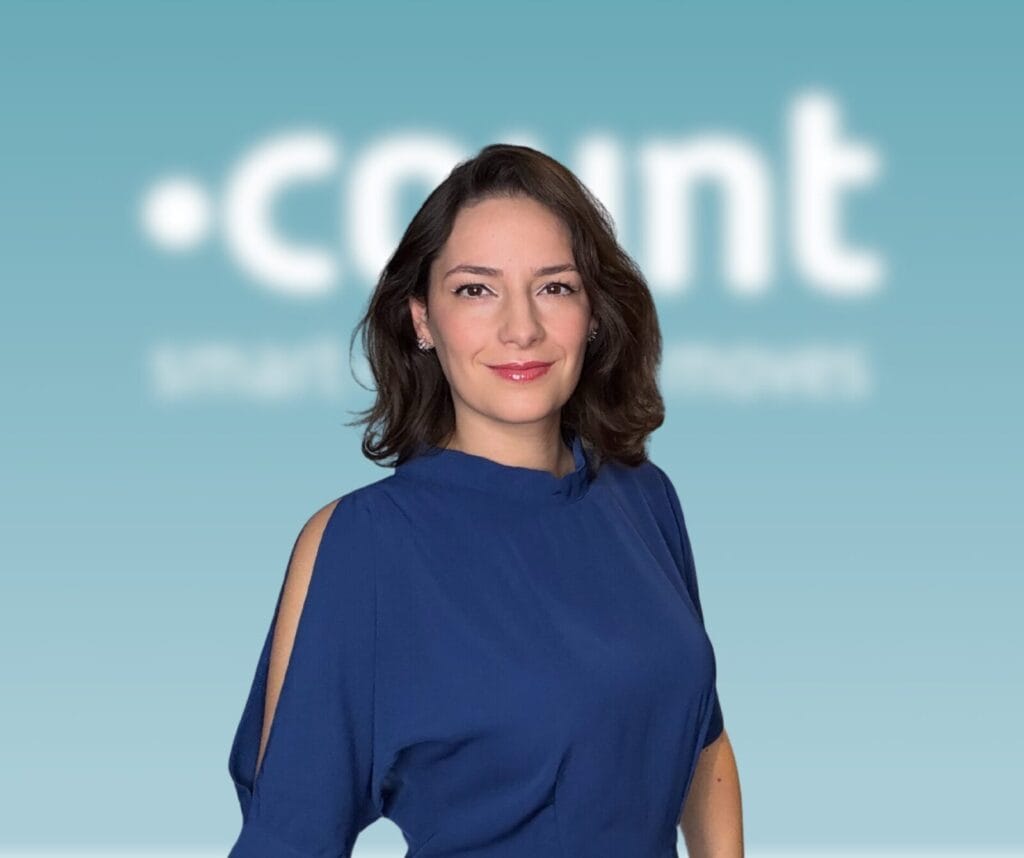
Laura Cornely is a Director at Count Finance, bringing a strong track record in financial analysis, deal sourcing and relationship management, built on experience across private equity, fund ratings and corporate benchmarking.




![[UNS] celebrate](https://ifamagazine.com/wp-content/uploads/wordpress-popular-posts/801986-featured-300x200.webp)