

This week, three asset classes broke new ground. The S&P 500 hit 7,000 points for the first time; Korean stocks soared above 5,000; and gold reached $5,000 a troy ounce. Jemma Slingo, Pensions and Investment Specialist at Fidelity International, explores what’s going on – and whether there are still opportunities for investors.
Unstoppable US
“After an eventful start to the year, the US market is rising again. Confidence has been bolstered by results from the world’s biggest technology firms.
“The valuation of the US market is under intense scrutiny, however. The current price-to-earnings ratio of the S&P 500 index – based on the past year’s earnings – is roughly 28, which has been exceeded only a handful of times over the past 20 years.
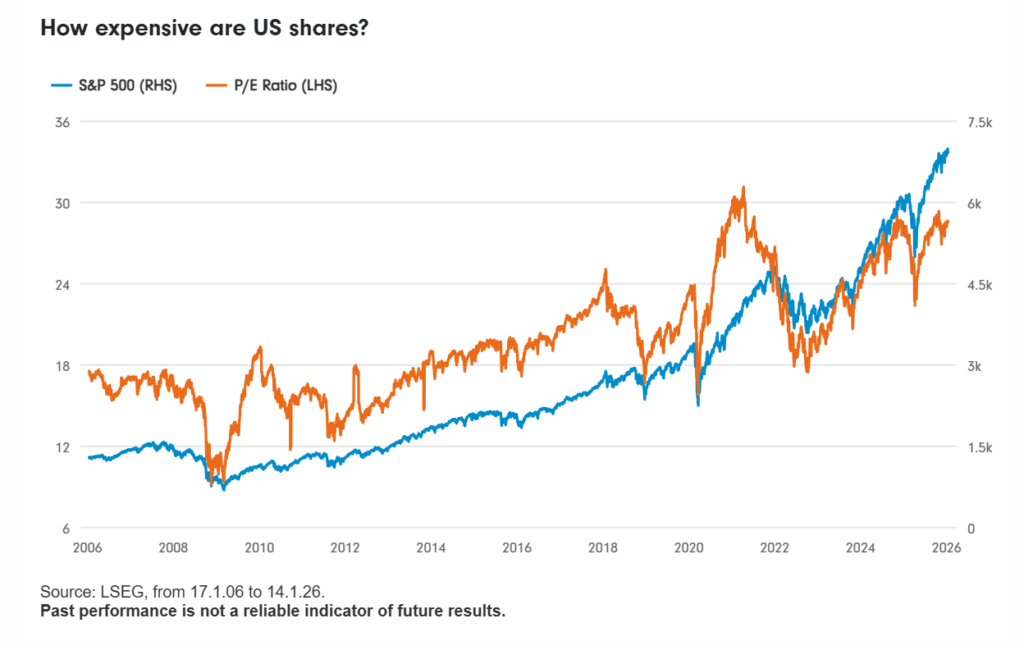
“We believe the base case for US equities is a continuing but volatile bull market. The biggest risks centre on the US’s high starting valuation.
“For those who are concerned about Big Tech’s dominance, there are various ways to invest in the US market that reduce exposure:
- “A broadening of the bull market, and lower valuations further down the market value scale, could benefit the Brown Advisory US Smaller Companies Fund.
- “The Legal & General S&P 500 US Equal Weight Index Fund avoids allocating more of your money to the larger stocks; instead, all members of the index are equally represented in the fund.
- “The managers of the Dodge & Cox US Stock Fundare ‘value’ investors who adopt a contrarian approach and often buy companies with depressed share prices.”
The new Japan?
“Korea’s KOSPI index had a terrific 2025 and is showing no sign of slowing down. Its success has been driven by its two largest constituents: Samsung Electronics and SK Hynix. Both have benefited from strong demand for semiconductors.
“Investors are also enthusiastic about corporate governance reforms. ‘Cross-shareholding’ networks – in which listed companies hold big portfolios of one another’s shares – have been clamped down on, and the interests of minority shareholders have been prioritised. Japan has led the charge on this, but South Korea – famous for its family-controlled conglomerates known as ‘chaebol’ – is now following suit.
- “One way to gain exposure to this trend is via Lazard Emerging Markets. This fund invests in companies from fast-growing parts of the world and counts SK Hynix as a top holding.
Going for gold
“Another year, another record for gold. The metal has climbed above $5,000 for the first time in its history, extending 2025’s record-breaking rally. Political tension, a weak US dollar, worries about inflation, and soaring debt levels have all pushed central banks and investors towards the precious metal.
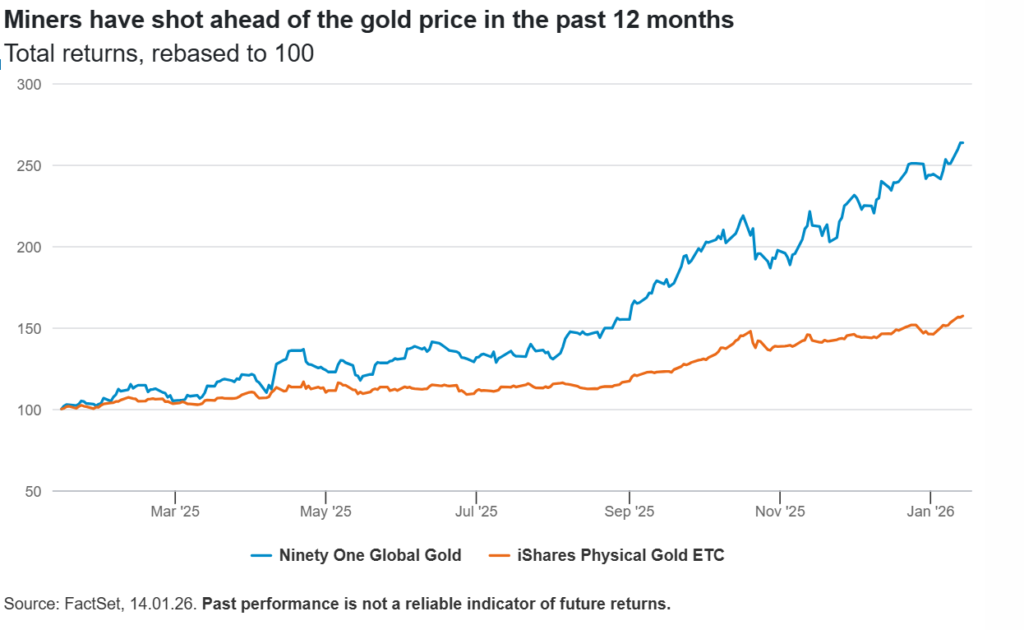
“Gold miners have been feeling the benefit – in recent months, they have shot ahead of physical gold. Over longer periods of time, however, miners have proved far more volatile than physical gold and have often underperformed.”
There are three main ways to invest in gold.
- “Physical gold, in the form of bars, coins and jewellery, is sold by organisations like the Royal Mint. Such investments come with extra costs and complications, however, like insurance and storage.
- “Exchange-traded funds (ETFs) are listed on stock exchanges and bought and sold like shares. The best will mirror movements in the gold price very closely and do so for a low charge. These are often described as ‘physical’ gold ETFs, meaning they are backed by actual gold held in vaults. One that features in Fidelity’sSelect 50 is iShares Physical Gold.
- “Invest in gold miners. There are various funds that hold precious metal miners, including Ninety One Global Gold. Miners offer exposure to the price of bullion – but there’s a lot more to think about than that. These companies tend to generate more volatile returns, meaning they will sometimes do better than the gold price and sometimes do worse.
Hidden bargain?
“So that’s what investors have been buying. But what is still unloved?
“The FTSE 100 enjoyed its best year since 2009 in 2025, rising nearly 20%. However, Fidelity analysis suggests the UK market is still significantly cheaper than other key regions.
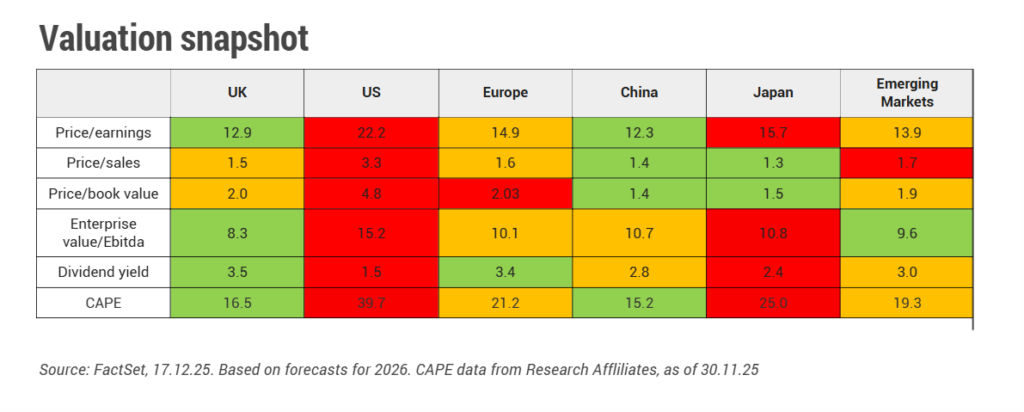
“Clearly there are problems in the UK economy. Growth is sluggish, government finances are fragile, and the UK stock market remains unattractive to companies looking to list. However, a steady flow of takeovers of UK companies, at premiums to their market prices, indicates the value to be found here.
“There are lots of ways to invest in the UK market.
- “Those who want low fees and low fuss could look at index trackers such as the iShares Core FTSE 100 ETF.
- “Some investors prefer an active approach, however. Fidelity Special Situations Fund is one of three actively managed UK funds on Fidelity’s Select 50 list. Managed by Alex Wright and Jonathan Winton, it focuses on undervalued UK companies with recovery potential.”




![[UNS] celebrate](https://ifamagazine.com/wp-content/uploads/wordpress-popular-posts/801986-featured-300x200.webp)