
Financial advice focuses on getting to the right answers. The right portfolio. The right level of risk. The right long-term plan. But as technology accelerates and AI tools become more embedded in advice processes, a bigger question is emerging: if we already know the right answer, why do so many clients still struggle to act on it? That’s the challenge at the heart of behavioural finance, and it’s something Greg B Davies, Head of Behavioural Finance at Oxford Risk, has spent the past 25 years tackling.
“I’ve spent the last 25 years focused on applied behavioural finance, mostly in the wealth management and financial advice sectors,” Greg explains. “I spent most of that time trying to bring ideas from academic decision sciences and behavioural sciences into the financial services world, in order to build things that help people make better financial decisions.”
At Oxford Risk, that thinking is being turned into technology. But crucially, it’s technology designed to support human advice, not replace it.
The gap between knowing and doing
One of the biggest misconceptions in financial services is that once a client understands what they should do, they’ll do it.
“If all the suitability tools tell us what the right answer is, unfortunately, telling people what the right thing to do is not enough to get them to actually do it,” Greg says. “There’s almost always a behavioural or emotional gap between what people know they should do and what they actually do.”
That gap, between knowledge and action, is where behavioural finance lives. The solution, he argues, isn’t necessarily changing the recommendation. It’s changing how it’s delivered. “Often, the route is changing communication and engagement. Sometimes behavioural capacity also changes what is suitable, or the pace at which someone should move towards it.”
For advisers, that’s a powerful reminder. The real value often isn’t in the spreadsheet. It’s in helping clients feel comfortable enough to act.
Why personalisation has to go deeper
Personalisation is one of the most overused words in fintech. But Greg is quick to point out that not all personalisation is created equal.
“Personalisation, unless you’re thinking about personality, is really just cosmetic,” he says. You can tailor an answer to someone’s income, debts and objectives, and still miss the mark. “You might deliver someone the answer that’s right for them, and they still might not act on it, because what leads people to act is often very individual.”
Financial personality, things like confidence, impulsivity and desire for guidance, shape how someone responds to advice. Some clients want details and data. Others want reassurance and framing. Some need pacing whilst others need momentum. “You could take any traditional finance segment and still find people that are materially different from each other in terms of personality,” Greg explains.
For advisers, that means segmentation by wealth or life stage only goes so far.
AI: powerful, persuasive… and potentially risky
So, what about the exponential technology that’s hit the scene? It seems there’s excitement, of course, but also caution. One concern Greg raises is persuasion. “If the AI gives an answer that is not wrong but is also not delivered in a way that the investor can live with, you have a problem where people might be nudged to act too quickly.”
He introduces the idea of emotional liquidity. “Part of good investing is not just getting invested, it’s staying invested… Emotional liquidity is probably more important than financial liquidity for most people.” In other words, if a tool persuades a client into a portfolio without building resilience, you may have created a problem for the next bout of volatility. “Just because AI can deliver something convincing and fast doesn’t mean it’s trustworthy or compliant,” he warns.
Why AI must sit on top of rules
Greg is clear that AI should enhance advice processes, not replace structured decision-making. “AI should not arrive at the answer entirely by itself,” he says. “It should sit on top of deterministic, rules-based suitability models, not replace them.”
The issue is auditability. “If the AI is a black box, we can’t audit it. How are we going to trust it? How are we going to validate the answer?” He highlights a critical compliance challenge: “Most of these LLM models have a certain amount of randomness built into them… That randomness is fine most of the time… However, it really matters when someone asks where to put their life savings. That’s exactly why governance matters: constrain what the model can do, log what it did, and keep humans accountable for high-stakes decisions.”
For regulated advice, consistency matters. Suitability isn’t the same as a holiday recommendation; it needs to be defensible.
Consumer Duty and foreseeable harm
Behavioural finance isn’t just academic. It has direct implications for Consumer Duty. “When markets are volatile… stress levels and anxiety increase, so what you do and say in volatile markets is likely to matter an awful lot more,” Greg explains.
In some cases, the right behavioural intervention is encouraging clients not to act. “It’s often better to nudge people towards inaction rather than action. Stepping back and looking at the long-term view is a better option there.”
If firms can see signs of distress, such as increased logins or reactive behaviour, and fail to respond, that could become a Consumer Duty issue. “You’ve got a situation of foreseeable harm,” he says, “which is counter to Consumer Duty.”
Are humans still preferred?
There’s a widely cited view that clients would rather hear advice from a human who’s right some of the time than an AI that’s right most of the time. Greg thinks that dynamic is already shifting. But he doesn’t believe humans are disappearing from the equation. Instead, the role is changing. “There are areas in life where you want the machine to do as much of the diagnosis for you as possible… but you want to hear it from a human.”
That distinction leads to one of the most important ideas. Greg separates advice into two parts: diagnosis and prescription. “Diagnosis is figuring out the right answer, and prescription is making people comfortable moving towards that right answer on the journey.”
Technology is rapidly shrinking the cost and speed of diagnosis. But that doesn’t mean advice is dying. “People are confusing analysis with advice,” he says. “Advice is much more than just analysis. Advice is the comfort that it brings to help people act on that analysis.”
The human-plus-machine future
The idea that advisers will be replaced by computers misses the nuance. “In the human advice model, a real differentiator becomes much more about behavioural prescription and trust,” Greg says.
Technology, in this framework, becomes an enabler. “We’re trying to provide technology to support those things, but the technology there is a supporter, an enabler, and an empowerment of the human rather than a replacer.”
And perhaps that’s the real takeaway from this conversation. The future of advice isn’t about choosing between human and machine. It’s about combining the strengths of both, using technology for structure, speed and scale, while keeping empathy, trust and behavioural insight firmly at the centre.
Looking further into the future becomes blurrier as technology adapts and evolves so rapidly, and so there remain many unanswered and unanswerable questions about what that may look like. Only time will tell, but in the meantime, Greg’s insights give us a peek into what the short-term future may be.
About Greg B Davies, PhD
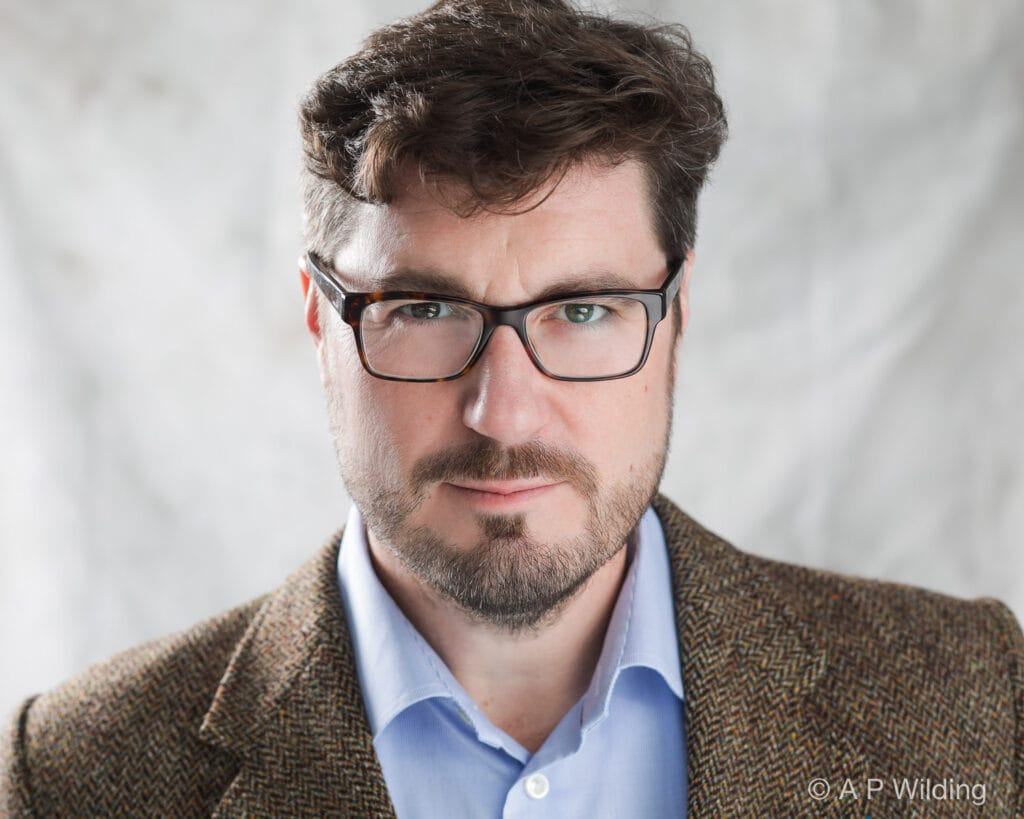
A globally recognised expert in applied decision science, behavioural finance, impact investing, risk suitability, and financial wellbeing, Greg Davies, Head of Behavioural Finance at Oxford Risk, combines academic rigour and real-life industry experience to answer these questions and provide valuable insights across a wide range of behavioural finance topics.
He founded and led the banking world’s first behavioural finance team at Barclays, where he was a Managing Director and Head of Behavioural Quant Finance for a decade. His PhD in Behavioural Decision Theory was awarded by the University of Cambridge, and he is a specialist in both the theory and practice of investment decision making and financial advice.
At Oxford Risk, he leads the development of its behavioural decision support software aimed at helping wealth managers and their clients to make the best possible financial decisions.
He has been a visiting lecturer at Imperial College London, held associate fellowships at Oxford’s Said Business School and University College London, and is the co-author of the book Behavioural Investment Management.




![[UNS] celebrate](https://ifamagazine.com/wp-content/uploads/wordpress-popular-posts/801986-featured-300x200.webp)