
Six in ten tenants across England and Wales are renting for longer than they ever planned to, according to new research from LRG.
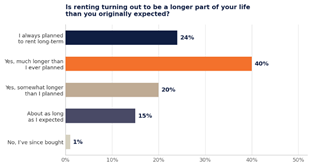
The Spring 2026 Lettings Report, which draws on responses from 650 landlords and tenants, found that 40% say they have been in the rental market for much longer than they expected, with a further 20% saying somewhat longer. Just 1% have since bought a home.
The findings reflect a rental market undergoing profound structural change. Rising house prices, persistent affordability pressures and tightening mortgage availability have combined to keep a growing proportion of tenants renting well beyond the point at which they expected to move into homeownership. For many, renting is no longer a temporary arrangement but an open-ended reality – one that the sector is only beginning to adapt to.
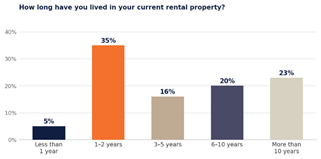
The data on how long tenants have been in their current home underlines how settled the picture has become. The single largest group, 35%, have been in their current property for one to two years, but a striking 59% have been there for three years or more, including 23% for over a decade. Only 5% have been in their current home for less than a year. In many respects, the Renters’ Rights Act’s shift to Assured Periodic Tenancies – replacing fixed-term agreements and giving tenants the right to remain indefinitely – is catching up with behaviour that has already shifted rather than driving change from the top down.
For many, the length of time they have been renting has come as a surprise. Some 40% say they have been in the rental market for much longer than they ever planned, with a further 20% saying somewhat longer. Only 15% say it has turned out about as long as they expected, and just 1% have since bought. When asked why, rising house prices and stalling mortgage affordability are the dominant explanations – factors that sit well outside tenants’ control.
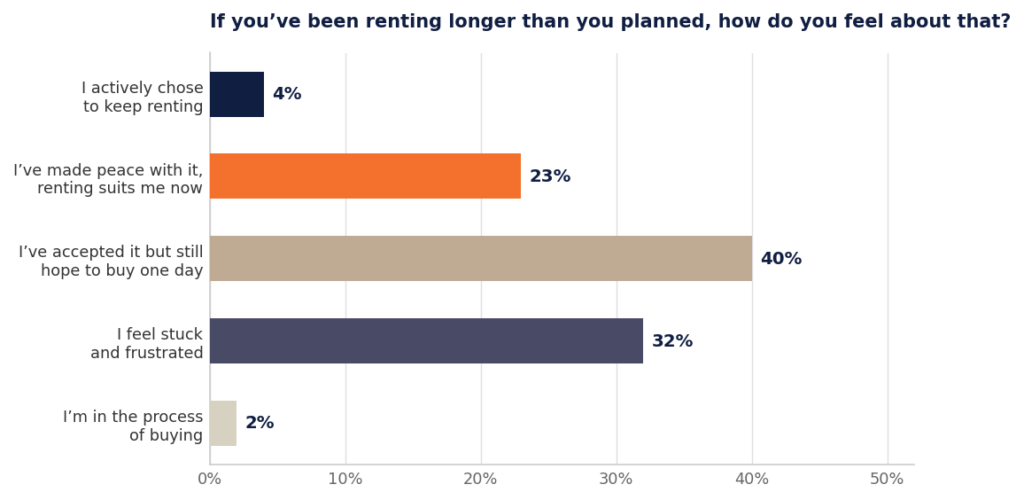
Feelings about that shift are more nuanced than a simple acceptance or rejection of long-term renting. Of those who have been renting longer than planned, 40% say they have accepted it but still hope to buy one day, while 23% say they have made peace with it and that renting suits them now. However, 32% say they feel stuck and frustrated – a significant minority for whom long-term renting is not a settled state but an ongoing source of strain. Only 4% say they actively chose to keep renting.
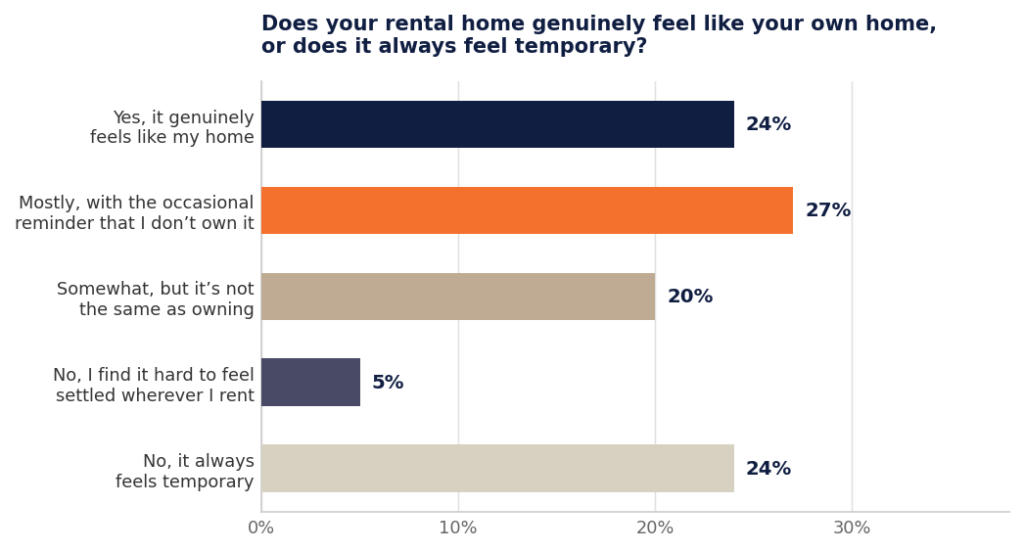
Attitudes to belonging tell a similarly nuanced story. Some 51% of tenants say their rental genuinely feels like home, either fully or mostly. But 24% say it always feels temporary and a further 20% say it is not the same as owning. The sense of belonging does improve with length of stay. Among those renting for over a decade, 45% say their home genuinely feels like theirs – but even in that group, 20% still say it always feels temporary. Long-term renting may be becoming the norm, but for many tenants, a settled sense of home remains out of reach.
The wider data points in the same direction. According to the English Housing Survey, private renters now spend an average of 4.6 years in their current home – up from 3.7 years in 2011. At the same time, ONS house price data shows that average house prices in England remain more than eight times average earnings, leaving homeownership out of reach for the majority of private renters without significant equity or family support. For this group, the private rental sector is not a stepping stone – it is the destination.
Landlords, for their part, are willing to accommodate longer stays. LRG’s survey found that 42% of landlords say the move to Assured Periodic Tenancies will make no change to how willing they are to encourage tenants to stay long-term, with 15% saying they will be more willing. Only 15% say they will be less willing, while 29% say they are not yet sure. The challenge is less about landlord attitude and more about whether the wider conditions – supply, affordability, and legislative certainty allow both sides to plan with confidence.
Allison Thompson, Chief Lettings Officer, Leaders part of LRG, commented, “Renting for longer is no longer the exception – for a growing number of people it has quietly become the norm. What the data tells us is that most tenants have not chosen this; they have accepted it. And acceptance is not the same as satisfaction. The 32% who say they feel stuck and frustrated are a reminder that long-term renting works well when the home, the landlord and the price are right – and when tenants feel secure. That is exactly where good agents and good landlords can make a real difference, helping to build the kind of stability that turns a rental into a genuine home.”